
How to Successfully Transition From ABA Therapy to School
School’s out for the summer, and children nationwide are soaking up the sunshine and freedom. They said goodbye to their binders and notebooks and said hello to adventures, late nights, and fun family vacations. While this is a time for relaxing your schedules, it can be challenging for children with autism to get used to. This is especially tough for children transitioning from ABA therapy to a school environment.
Starting school is a significant milestone in every child’s life. In the next few months, your child will be in a new environment with fresh expectations, surrounded by unfamiliar people—talk about nerve-wracking! However, your child’s unique way of communicating, socializing, or self-soothing shouldn’t make them or you nervous for the school year.
The child’s family and therapy team must work together to achieve a smooth transition and create an effective plan. ABA professionals will play a key role in helping your child exceed their expectations and goals. You can provide your child with life-fulfilling developments by learning ways to curb disruptive behaviors, maximize their learning skills, and overcome anxieties.
Don’t wait until the last month of summer to begin aiding your child during this transformative time. Here are a few tips on how to successfully transition from ABA therapy to school.
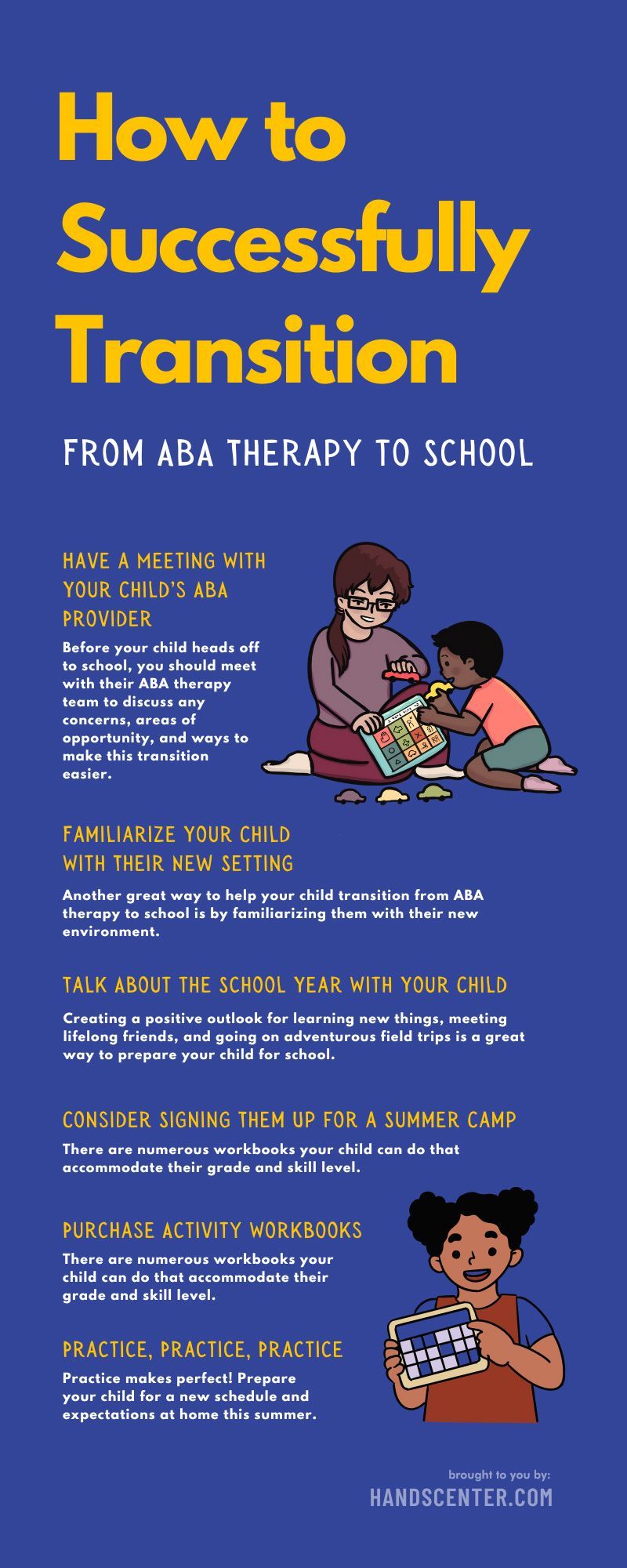
Have a Meeting With Your Child’s ABA Provider
Before your child heads off to school, you should meet with their ABA therapy team to discuss any concerns, areas of opportunity, and ways to make this transition easier. This is your time to ask any questions about problematic behaviors, potential school programs, and other support your child may need.
During this meeting, you should agree on short and long-term goals and a timeline to achieve them. Discuss any training needs of the therapists and where your child may need extra help. This way, when the school year begins, your child will have the necessary tools to self-regulate and accelerate.
This is also a great time to develop a relationship with the school and bridge a gap between the ABA professionals and their teachers. The school will draft an individualized education program based on your child’s skill level. The program will allow them to achieve state standards at their own pace. Everyone being on the same page to help your child develop personally and academically will help make the transition a success.
Familiarize Your Child With Their New Setting
Another great way to help your child transition from ABA therapy to school is by familiarizing them with their new environment. Some schools will allow new students to tour and meet the administration. Giving your child a chance to visit the classrooms, art hall, cafeteria, playground, and other areas will help them become more comfortable with the transition.
Try to meet all the teachers your child will interact with regularly. Have your child take a picture with them and create a social story to help them familiarize themselves with their teachers. Telling them a fun and upbeat tale each day, occasionally multiple times a day, will help them become more excepting and excited for the new school year.
Talk About the School Year With Your Child
We all understand that school can be a pain. Going through elementary, middle, and high school is a rollercoaster of ups and downs. However, creating a positive outlook for learning new things, meeting lifelong friends, and going on adventurous field trips is a great way to prepare your child for school. If you can get a hold of the school year’s activity schedule, talk about the science fair, themed days, and other fun things coming up in the next few months.
Show your excitement about them growing up and being able to do all these fun things at their new school. To help the process, hype them up for becoming a big kid! We recommend creating a visual countdown and giving them positive reinforcement each time they mark off the days on the calendar.
How Parents Can Help Maintain Skills During the Summer
A great way to ensure that your child has a smooth transition from ABA therapy to a school environment is by continuing to hone their skills. Don’t allow them to lose a sense of structure at home. Creating a daily schedule full of fun activities that help them develop their skills is key. Below are a few examples of how parents can help support their children at home.
Purchase Activity Workbooks
A great way to keep their little minds growing is by purchasing activity workbooks. There are numerous workbooks your child can do that accommodate their grade and skill level. Your child can benefit from retaining these academic skills, from scientific worksheets to math books to fun literature brain games. This way, they won’t fall behind at the beginning of the year.
Practice, Practice, Practice
Practice makes perfect! Prepare your child for a new schedule and expectations at home this summer. Get them familiar with wearing a backpack, buying or carrying lunch, and having block schedules. If your child must wear a uniform, you should also help them get used to it. This way, it won’t come as a surprise when the school year begins.
Tip: You should also get them used to an adjusted sleep schedule so they’re not surprised when the school year begins, and they get woken up earlier.
Consider Signing Them Up for a Summer Camp
Another great way to prepare your child for the school year is by signing them up for summer camp or an extended school program. This is an excellent opportunity for children to make friends, get familiar with the school, and try new activities. However, assessing your child’s comfort before signing them up is always best.
At HANDS Center for Autism, we continue to strive for our learners. We aim to prepare our students for any challenges, including the scary ones. Fear not. We offer autism therapy services to help them overcome their anxieties or nervousness when considering a change. Through our professional team of behavior therapists, our goal is to provide your child with a fulfilling life by learning critical developmental skills. If you’re searching for a center that upholds integrity, please call us.